India and Canada have reactivated their trade relationship following a prolonged diplomatic cooling, and they are doing so at a time when both are trying to move away from dependence on the U.S. market amid the new tariff policy of U.S. President Donald Trump.
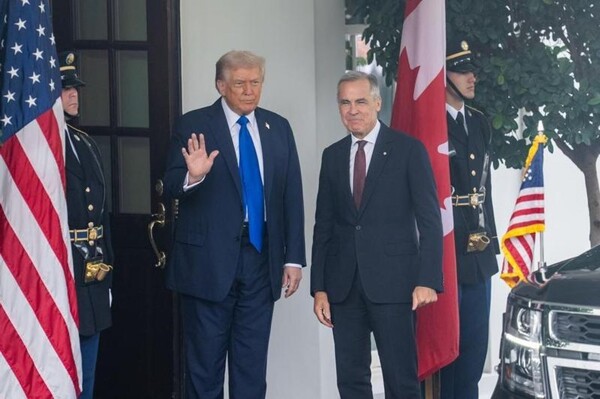
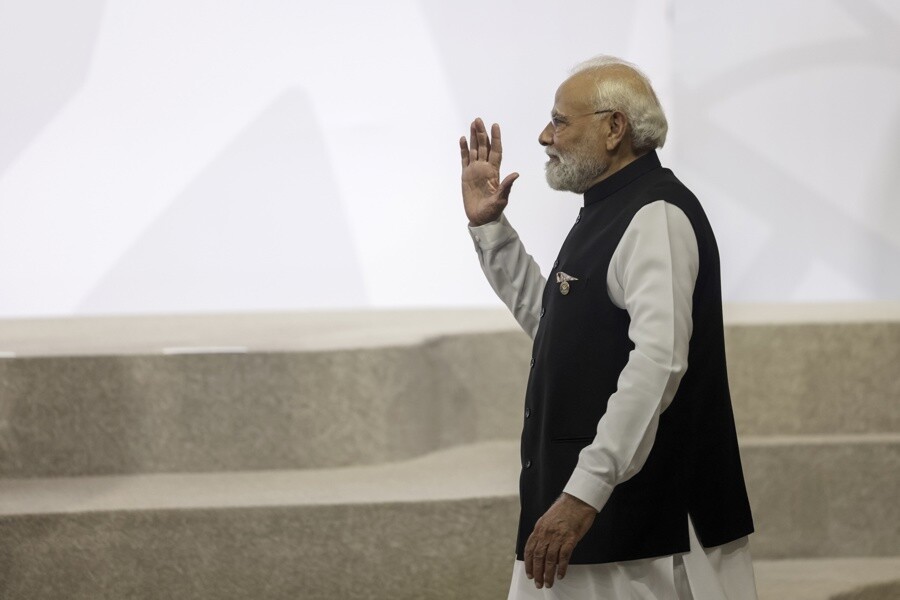
This rapprochement, formalized on Sunday during the meeting between Indian Prime Minister Narendra Modi and his Canadian counterpart, Mark Carney, on the sidelines of the G20 summit in Johannesburg, reopens negotiations for a Comprehensive Economic Partnership Agreement (CEPA) with the goal of doubling bilateral trade by 2030.
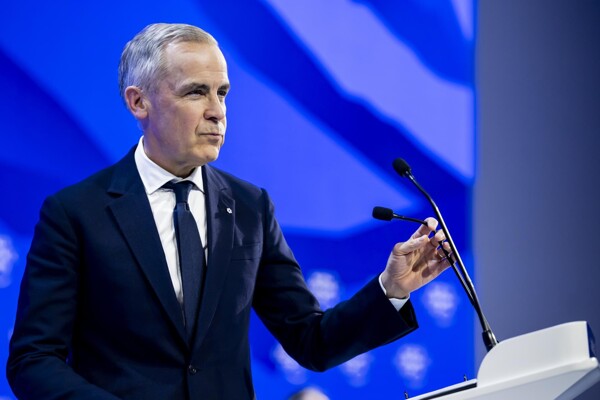
"India is the fifth-largest economy in the world, and that means great opportunities for Canadian workers and businesses," Carney stated on Sunday in his social media posts.
Ottawa expects the trade agreement to boost bilateral trade to C$70 billion (US$49.616 billion) by 2030, double what it is now, with the increase in exchanges in sectors such as goods, services, investments, digital trade, energy, agriculture and food, among others.
The trade agreement could be sealed in early 2026, when Carney is scheduled to visit India following the invitation extended by Modi during the G20 summit in South Africa.
Why now? India and Canada are two of the countries hardest hit by the tariffs imposed by Trump after his return to the White House this past January.
The United States has imposed a 50% tariff on the Asian country for purchasing Russian oil, amidst negotiations that New Delhi is maintaining with Washington to reach a trade deal aimed at alleviating tariff pressure. Similarly, Trump has penalized Canada with 35% tariffs on products not included in the USMCA treaty due to fentanyl trafficking, migrant flows, and for the airing of a Canadian ad on U.S. television against the tariffs.
Furthermore, Trump has suspended trade negotiations with Canada.
In this context, India and Canada have accelerated in recent months the search for new "reliable" trading partners. The two countries began their diversification with the European Union (EU) and the United Kingdom.
Although this means ignoring the deep differences that New Delhi and Ottawa maintain in their diplomatic relations, especially since September 2023, when then-Canadian Prime Minister Justin Trudeau accused India of the murder in Canada of a Canadian Sikh dissident.
What it means for India New Delhi is seeking to secure supplies of critical minerals, a sector that Modi's administration considers essential to sustain its energy transition and the development of industries such as batteries, electric vehicles, and advanced electronics.
According to India's Ministry of Commerce, trade with Canada reached $8.669 billion in 2024-2025, with a deficit for New Delhi of $225 million. Data from the Consulate of India in Toronto indicates that India depends on Canada for coal, pulses, fertilizers, wood pulp, and minerals, while it mainly exports medicines, jewelry, mobile phones, and agri-food products.
India's Minister of Commerce, Piyush Goyal, stated this Monday in New Delhi that India sees "vast potential" with Canada in those resources and mineral processing technologies, areas where New Delhi wants to diversify suppliers to continue its internal growth.
Goyal also pointed to clean energy, nuclear energy, and emerging technologies —including artificial intelligence— as new areas of cooperation between the two countries.
What it means for Canada Last year, Canada exported US$412 billion to the United States, 76% of its external sales.
But now, both have set their sights on other countries with high commercial potential.