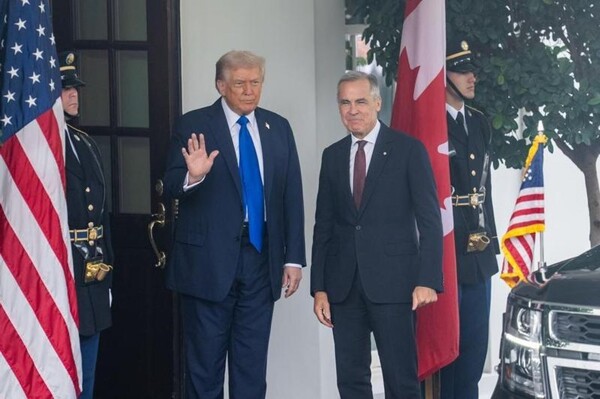
In March of last year, Canadians elected Mark Carney as Prime Minister, considering him the most capable official to handle the unprecedented pressures resulting from the protectionist policy of US President Donald Trump and his blatant disregard for their country's sovereignty. One of the key elements of Carney's response was his strong commitment to strengthening the country through active government participation in the economy and adopting a wide-ranging industrial policy amidst current geopolitical challenges.Carney established an Office of Major Projects to remove regulatory obstacles and coordinate support for infrastructure development. He also identified a series of new industrial projects that will initially benefit from these efforts, with a promise of more projects in the future.After announcing a significant increase in military spending, Carney created a new defense investment agency to streamline procurement and maximize production within Canada. He also unveiled a new program to address Canada's housing crisis, which includes a direct state role in construction.To cover the costs of all this, Carney plans to change how the deficit is managed in areas needing investment, while reducing spending in other areas related to Canadian welfare.Despite his liberal government not having a majority in parliament, Carney has secured enough support to pass a budget to fund his plans and to remain in his position for now.Industrial PolicyThis shift towards industrial policy is only understandable in light of the radical change in the US approach to Canada with Trump's return, who imposed tariffs on Canadian exports of steel, aluminum, automobiles, energy, critical minerals, and timber.Trump also repeated his previous criticisms of Canada's low defense spending, while doubting the United States' commitment to NATO, a cornerstone of Canadian defense policy. He shocked Canadians by again suggesting the annexation of their country.Trump has had a profound impact on Canadian domestic policy. Former Liberal Prime Minister Justin Trudeau, who was no longer popular after nearly a decade in office and was burdened by a weak economy, stated that he would not run for re-election. Initially, it seemed that regardless of who led the Liberals, the Conservatives, led by the sharp-tongued Pierre Poilievre, would come to power.Difficult circumstancesHowever, amid growing Canadian concerns about Trump, the Liberals chose Mark Carney to lead their election campaign.Carney is not a professional politician but an economist, a graduate of Oxford University, and a former investment banker at Goldman Sachs.Carney, who has served as Governor of the Bank of Canada and the Bank of England, possesses the serious appeal that Canadians were looking for in these difficult times. He was helped by the fact that Poilievre's sharp rhetoric and his striking resemblance to Trump became a liability for him.Carney led the Liberals to victory in late April; however, they did not win a majority, affected by the pre-election period when Trump focused on issues other than Canada, which allowed voters to refocus on their grievances during a decade of Liberal rule.Nevertheless, with an insufficient number of opposition members willing to force an election, it appears that Carney's government can stay in power for now, as indicated by its narrow win in the vote on its budget on November 17th.Source: The National Interest